12 Stats About Lidar Robot Vacuum Cleaner To Make You Seek Out Other People
Buying a Robot Vacuum With LiDAR A robot vacuum with lidar technology can make an outline of the home to assist in avoiding obstacles and plan routes efficiently. It also can detect objects that other sensors may miss. Lidar technology has been used in self-driving cars and aerospace for years. However, it isn't capable of seeing tiny obstacles such as power wires. This can cause the robots to get injured or tangled. LiDAR technology LiDAR technology (Light Detection and Ranging) that was introduced in the late 1990s, has improved robot vacuum navigation systems. These sensors emit laser beams and determine the time it takes them to reflect off objects in the surrounding, enabling the robot to build a real-time map of its surroundings. This helps it avoid obstacles and navigate efficiently, resulting in a smoother cleaning process. The sensor is able to detect various surfaces, including flooring, furniture walls, walls and other obstacles. It also can determine the distance of these objects from the robot. robot vacuum cleaner lidar robotvacuummops is utilized to calculate a path that minimizes collisions and cover the room in the most efficient way. Lidar is more accurate than other navigation systems like ultrasonic or infrared sensors, which are susceptible to interference by reflective surfaces as well as complex layouts of rooms. This technology can be used to improve the performance of a variety of robotic vacuum models, from budget models to high-end brands. The Dreame F9 for example, with its 14-infrared sensor, can detect objects with accuracy of up to 20 millimeters. However, it requires constant monitoring and could miss smaller obstacles in tight areas. It is recommended to buy an expensive model with LiDAR for better navigation and more efficient cleaning. Lidar-equipped robots also possess the ability to keep track of the layout of the surroundings, which allows them to clean more efficiently in subsequent cycles. They also have the ability to adapt their cleaning methods to accommodate different environments, such as transitions from carpets to hard floors or stairs. Some of the best lidar robot vacuums are also equipped with wall sensors, which prevent them from pinging off walls and large furniture during cleaning. This is a frequent cause of damage, and could be costly if the robot vacuum breaks something in the process. However, it is possible to disable this feature in case you do not want your robot to perform this job. Lidar mapping robots are the most advanced technology in robotics that is smart. This sensor, originally used in the aerospace sector, provides precise mapping and obstacles detection which makes it a crucial component of robot vacuums. These sensors can be combined with other intelligent features like SLAM and virtual assistants, to provide an unbeatable user experience. SLAM technology The navigation system utilized in a robot vacuum is a crucial aspect to take into account when purchasing one. A quality system will have superior map-building capabilities which will allow the robot to move more efficiently around obstacles. The navigation system should also be able to differentiate between objects and recognize the moment when objects move. Lastly, it should be able to detect the edges of furniture and other obstacles. This is essential for a robot to function efficiently and safely. The SLAM technology, which stands for simultaneous localization and mapping, is a method that allows robots to map their surroundings and determine their location within the space. By using sensors, like cameras or lidar, the robot can create a map of its surroundings and use it to navigate. In some cases, a robot may need to update its maps if it encounters a new area. A variety of factors affect the performance of SLAM algorithms, including data synchronization and processing speeds. These factors can affect how the algorithm performs and if it is appropriate for a specific use. It is also crucial to know the hardware requirements of a particular use case before choosing an algorithm. For instance, a house robot vacuum that does not have SLAM will move in a random manner across the floor and may not be able to detect obstacles. It might also have trouble “remembering”, which can be a huge issue. It also requires lots of energy. SLAM solves this issue by combining information from a variety of sensors, and then incorporating sensor movement into its calculation. The result is a much more accurate representation of the surrounding. The process is usually performed using a microprocessor with low power and relies on image matching points cloud matching, optimization calculations, and loop closure. It is also essential to keep the sensor clear of dust, sand and other debris that might affect the SLAM system's performance. Obstacle avoidance The navigation system of a robot is vital to its ability navigate in an environment and avoid obstacles. LiDAR (Light Detection and Ranging) is a method of technology that could be a major advantage for the navigation of these robotic vehicles. It is a 3D model of the surrounding and assists robots in avoiding obstacles. It allows the robots to design a more efficient route. In contrast to other robot vacuums that employ the traditional bump-and-move navigation technique which makes use of sensor inputs to activate sensors around a moving robot LiDAR mapping robots use more advanced sensors to take precise measurements of distance. These sensors can tell the distance a robot is to an object. This makes them more accurate than traditional robot vacuums. The first step in the obstacle-avoidance algorithm is to determine the robot's current position in relation to the target. This is accomplished by formulating the angle between thref and for several positions and orientations of the USR. The distance between the robot and the target is calculated by dividing the total angular momentum of the USR and its current inclination, by the current angular velocity. The result is the desired trajectory. Once the robot has identified the obstacles in its surroundings it then begins to eliminate them by analyzing the pattern of their motion. It then allocates sequences of grid cells to the USR to move it through each obstacle. This avoids collisions with other robots that may be in the same area at the same time. In addition to the LiDAR mapping it also has an impressive suction as well as various other features that make it a great option for busy families. It is also equipped with a camera on board that lets you monitor your home in real-time. This is a fantastic option for families with pets or children. This premium robotic vacuum has an on-board camera with a resolution of 960 pixels that can recognize objects on the floor and steer clear of them. This technology makes it easier to clear a space more effectively and effectively, as it can detect even small objects such as cables or remotes. To ensure maximum performance, it's essential to keep the lidar sensors clean and free of dust. App control The top robot vacuums come with a range of features to make cleaning as easy and efficient as is possible. This includes an ergonomic handle that makes it simple to grab the vacuum and a spot clean button. Some models have zones keep-outs and map saving to adjust the cleaner's performance. These options are fantastic if you want to create zones for vacuuming or mowing. LiDAR mapping technology helps improve the ability of robot vacuum cleaners to navigate. Originally developed for aerospace use, this technology uses light detection and ranging to create a 3D map of a space. The data is then used to identify obstacles and plan an efficient route. This allows for a faster cleaning and ensures that there are no spaces or corners left unclean. A lot of high-end robot vacuums have sensors to prevent them from falling down stairs or other objects. They detect cliffs using infrared light reflecting off of objects. They then adjust the vacuum's path accordingly. It is important to keep in mind that these sensors are not foolproof, and they can be prone to false readings if your furniture is shiny or dark-colored surfaces. 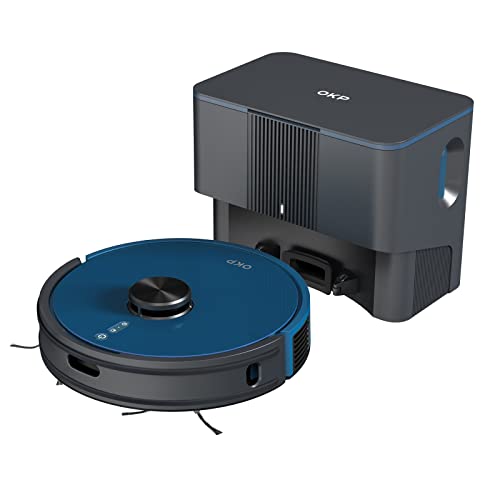 Another useful feature in a robot vac is the ability to create virtual walls and no-go zones, which can be set in the app. This is a huge help if you have cables, wires or other obstructions you do not want the vac to get into. You can also create a schedule that your vacuum will automatically follow. This means that it won't skip any cleaning sessions or forget about an area. If you're in search of a fantastic robot vacuum that is packed with features that are cutting-edge, consider the DEEBOT T20 OMNI by ECOVACS. It's a powerful robot vacuum and mop combination that can be controlled using the YIKO assistant or linked to other smart devices for hands-free operation. The OMNI Intelligent Adapt 2.0 intelligent mapping system utilizes lidar to avoid obstacles and plan the most efficient route to clean your home. It also comes with a full-size dirt bin and a battery that lasts up to three hours.